

Indonesia’s event economy needs a tourism return test
Indonesia’s Tourism Ministry has attached a substantial figure to the country’s event economy. It estimates that supported regional, national and international events generated Rp858.12 billion in economic circulation during the first half of 2026.
The total comprises two distinct portfolios. An evaluation of 28 Karisma Event Nusantara regional festivals recorded Rp196.97 billion, while another 17 national events and eight international events produced an estimated Rp661.15 billion.
These figures demonstrate activity, but they do not yet establish a tourism return. Economic circulation can encompass direct sales, visitor spending or modelled secondary effects. The published material does not specify which components were counted, how public support was valued, or whether visitors were local residents or travellers.
That distinction is critical for governments, sponsors and venue investors. A crowded free festival may hold deep cultural value while generating modest travel demand. Conversely, a smaller destination concert might drive higher sales for hotels, airlines and local transport.
Scale and yield point in different directions
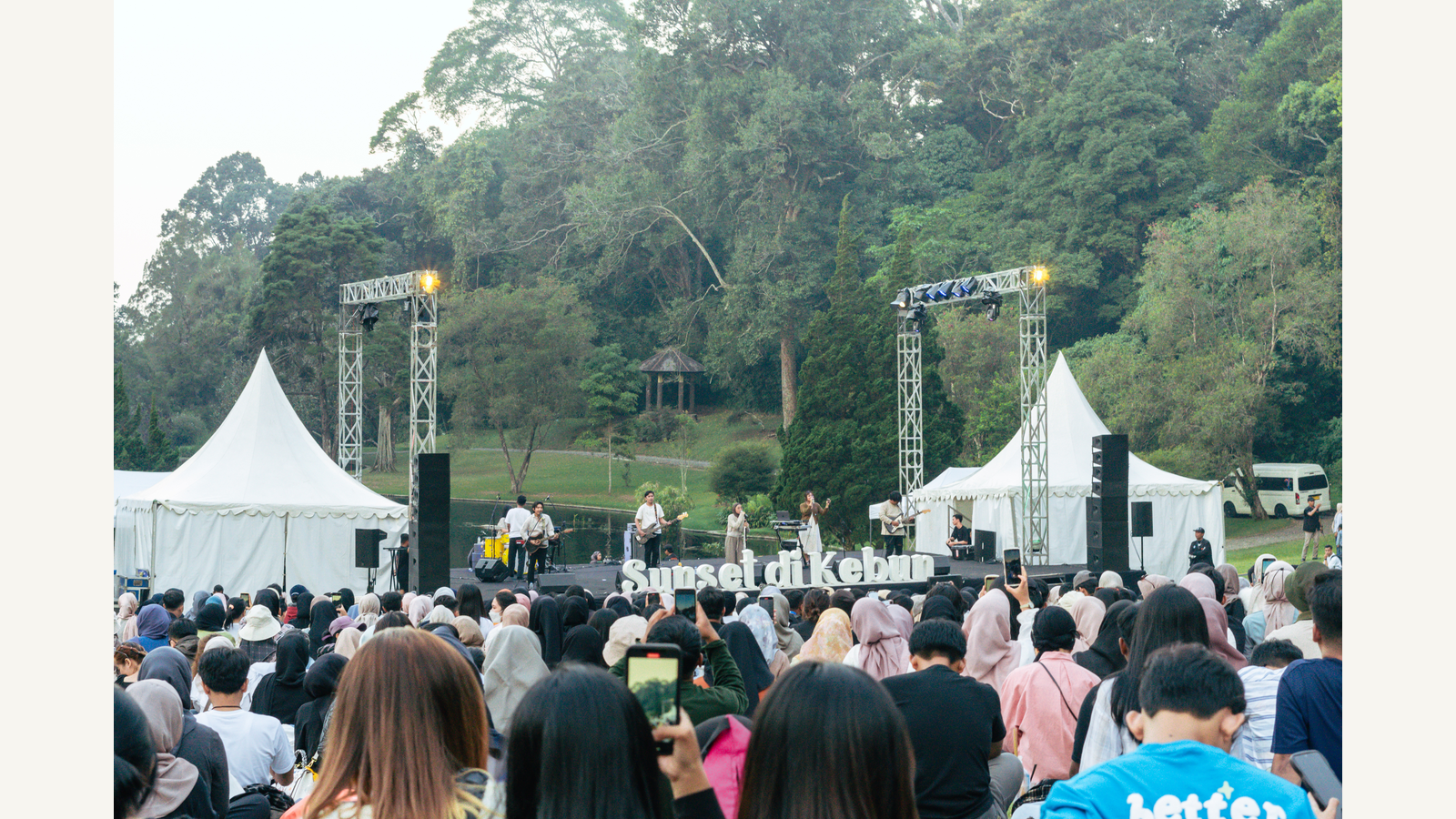
The regional festivals evaluated drew 2.46 million visits, involving 7,204 micro, small and medium-sized enterprises, alongside 61,868 workers, artists and community participants.
The national and international segment attracted more than 614,731 visitors and involved 1,326 small businesses and more than 18,016 arts workers and community members.
The difference is revealed through simple division. The regional programme generated approximately Rp80,000 in reported circulation per visit. The larger-tier group generated roughly Rp1.08 million per visitor – about 13 times as much.
This gap may reflect ticket sales, venue spending and a higher proportion of travelling audiences. It could also stem from varying event lengths or accounting methods. Without a common methodology, it remains unproven that one tier is 13 times more productive.
A similar pattern emerges at the business level. Reported circulation averaged about Rp27 million for each participating regional enterprise. The comparable figure for national and international events was nearly Rp499 million, more than 18 times higher.
These ratios do not represent vendor revenue; they merely divide a portfolio-wide estimate by enterprise participation. Yet they frame the commercial question for future evaluations: how much event spending actually remained with local firms?
Participation is not the same as durable employment
Regional festivals involved more than three times as many workers and community participants as larger-tier events. Such reach is vital in regions where cultural work is often informal and opportunities are scarce.
However, headcount is not a proxy for employment quality. A person engaged for a single rehearsal and one hired for several months are counted equally. The published results offer no data on duration, remuneration or repeat-contract rates.
The same issue applies to small-business inclusion. While a stall holder may record strong sales, they may also face stock losses, travel costs and event fees. Gross turnover reveals little about margins or cash retained post-event.
The public selection criteria require events to be annual, open to the public and staged at least three times. Organisers are also assessed before events can enter the regional programme.
Crucially, economic impact carries only a 5% weighting in the published scoring guide. Social-cultural and environmental impacts receive another 5% each. While this is a sensible balance for cultural policy, it does not constitute a tourism investment test.
A more robust scorecard would report public funding alongside direct local sales. It should also track paid workdays, vendor margins and visitor origins, allowing organisers to weigh reach against durable income.
Destination spillovers should decide future support
The ministry’s strongest tourism case lies beyond the event gate. Overnight visitors purchase accommodation and meals, utilize transport and may visit nearby attractions before departing.
These linkages distribute demand across hotels, food suppliers, logistics operators and booking platforms. They can also highlight capacity constraints: room shortages drive up prices, congested transport harms residents, and poor waste management shifts costs to the destination.
For each event, the ministry should distinguish between local residents, day visitors and overnight tourists. It should record average stay, off-site spending and the share captured within the host district. Repeat visits six months later would indicate whether an event built sustained destination demand.
Public support should align with the purpose of each tier. Regional festivals may merit backing for cultural continuity, broad participation and geographic reach. Conversely, large national or international events should meet a higher threshold for attracting audiences from outside the host destination, off-site spending and private co-investment.
The ministry states its 2026 support portfolio encompasses 45 national and 94 international events. This pipeline provides an ideal test bed for more sophisticated analysis, rather than just a busier calendar.
Standardised reporting would assist hotel groups in capacity planning and provide airlines with clearer demand signals. It would also help sponsors identify formats that convert attention into local commerce, while local authorities could direct transport and sanitation spending toward events that extend stays.
The Rp858.12 billion figure is evidence that events move money; it does not yet prove that the public is receiving the optimal tourism return. Indonesia can bridge this gap by publishing a consistent ledger that tracks each rupiah from support to visitor spending, local retention and paid work.